_

Welcome to Vital Label!

Vital Label is a blog focused on the importance of labeling in consumer products.

Malaysia National Consumers Day 2014 (HPM 2014)

The National Consumers Day is an annual event organized by FOMCA. Let's celebrate it by participating in 12 competitions held at the national level.

Follow Us On Facebook

Like our Facebook page to get our updates on your news feed.

Showing posts with label video. Show all posts

Tuesday, July 1, 2014

Why It's Important to Read Food Product Labels


From cheese snacks that don't contain cheese to creamer without any cream, Pat Foran explains the importance of reading labels.

A video by CTVNews; uploaded on The Globe and Mail Video.


Link

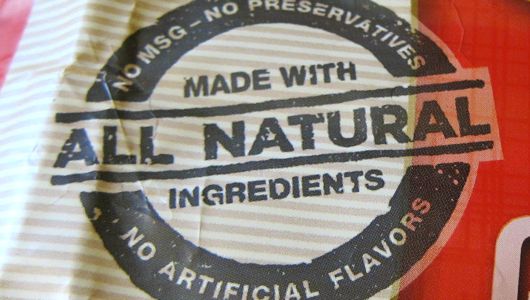
What Does "Natural" Really Mean on Food Labels?

Many consumers believe that "natural" products are better and healthier than others, but are often confused about what the label actually means. Now Consumer Reports is launching a campaign to ban the term, claiming it confuses and misleads shoppers.

In a new survey of 1,000 people by the Consumer Reports National Research Center, nearly 60 percent of people said they look for the term "natural" on food labels when they shop.

About two-thirds of people surveyed said they believe the term "natural" means that a processed food has no artificial ingredients, pesticides or genetically modified organisms (GMOs). But in fact, the FDA has not developed a strict definition of the term for food labels. The agency says it won't object to the claim "natural" as long as there are no artificial or synthetic ingredients in a particular product.

"Consumers are severely misled by the natural label," Urvashi Rangan, executive director of the Food Safety and Sustainability Center at Consumer Reports, told "CBS This Morning."

"With 'natural,' any manufacturer can pretty much stick it on their package," she said. "It doesn't mean very much."

"There is no formal definition" of the term, Kristin Kirkpatrick, a registered dietician at the Cleveland Clinic, told CBS News. "I do think we have a gray area."

In the survey, nine out of 10 Americans said that foods containing GMOs should be labeled and meet safety standards established by the government.

The report also showed that people's understanding of the term "raised without antibiotics" varies. About one-third of people in the survey assumed incorrectly that no other drugs (besides antibiotics) were given to the animal used in food labeled as "raised without antibiotics."

So, is there a way for consumers to check if a particular processed food product is really as "natural" as they'd like?

Calling the manufacturer and asking is often the best way, Kirkpatrick said. And if the manufacturer says that the information is proprietary and the company cannot reveal the formula, this may not reflect well on the manufacturer's claims about how natural a product is, she said.

Kirkpatrick also points out that just because something is "natural" does not mean it's necessarily good for you. Products that are full of sugar and calories sometimes carry the label "natural" without being especially healthy.

She suggests a simple solution to the issue: avoid packaged foods whenever possible. If people cook with more whole foods instead of processed products, she says, they are less likely to have to deal with confusing labels.

"We should look at our own habits," Kirkpatrick said. "Best foods for you are the ones that have no claims."

Retrieved from : CBS News

Sunday, June 29, 2014

Reading Food Labels


When shopping for food, an easy way of checking whether food products are safe for you to eat is to read the label. This will give you a list of the ingredients in the product and also highlights any allergens present. 

This video explains what information is on food products and how this can help you identify which foods are safe for you to eat.

A short video produced by Coeliac UK.

Read more here.

Saturday, June 28, 2014

Many Food Labels Mislead Consumers


The Food and Drug Administration is cracking down on food manufacturers for misleading consumers about the nutrient content of their products on the front label of the packaging.

An excerpts from the KUJH-TV Newscast produced by students at the William Allen White School of Journalism, University of Kansas, United States of America.

Wednesday, June 25, 2014

The Importance of Reading Food Labels


The importance of reading food labels; from the author of Read It with a Grain of Salt - The Truth about Canadian Food Labels from an Industry Insider.

Uploaded by Allison Jorgens on Youtube.


Tuesday, June 24, 2014

Misleading Food Labels


We take a look at what's really in your shopping basket with many food labels causing confusion.

Produced by Michael Pell, brought to you by Australia's No. 1 Breakfast Show, Sunrise (Channel 7).


Sunday, June 22, 2014

Are You Smarter Than A Food Label?


Spoof of the popular game show, this segment pits FDA's "Labelman" against a contestant in food label knowledge. Questions cover topics such as Calories, Serving Size, Servings per Container, The 5-20 Rule and more.


Produced by CDRH-TV for CFSAN [vpfood]; uploaded by U.S. Food and Drug Administration (USFDA).


Friday, June 20, 2014

Decoding Product Labels


UNL Extension Turfgrass Specialist Roch Gaussoin talks about what to look for on product labels at the garden center.

Source

Twitter Delicious Facebook Digg Stumbleupon Favorites More